
 Sachin Solanki
 Mar 12, 2026
Chia Seeds: Ancient Superfood Reconnecting the World Through Nutrition and Trade
Education
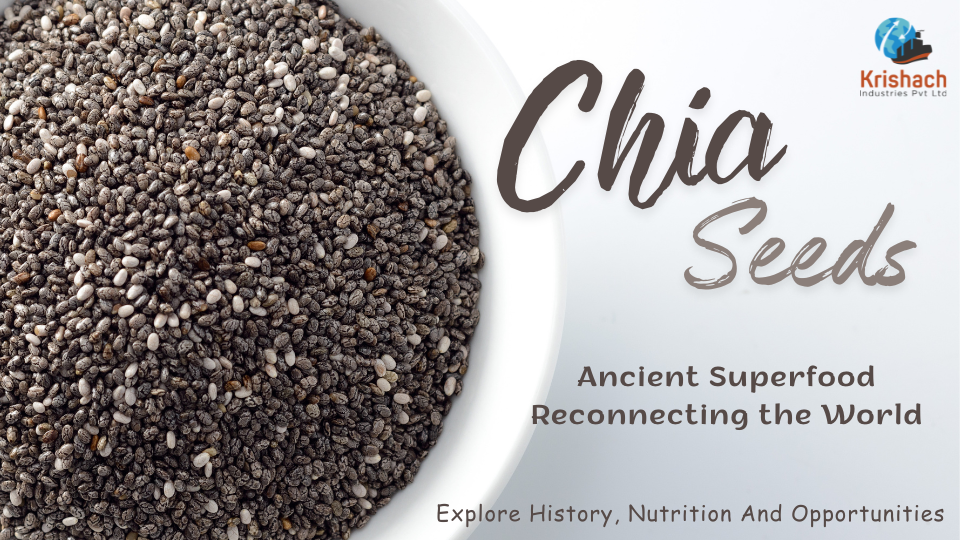
Chia Seeds: Ancient Superfood Reconnecting the World Through Nutrition and Trade
Introduction – The Ancient Seed Rediscovered
Tiny chia seeds were domesticated in Central America thousands of years ago. Ancient Aztec and Maya farmers cultivated the plants around 3500 B.C. and used the seeds for food, medicine and religious rituals. In Nahuatl, the word chia means “strength,” and warriors relied on these seeds to sustain them during long journeys and battles. Spanish colonization nearly eliminated chia cultivation. After centuries of obscurity, scientists and farmers revived the crop, and the tiny seed has re‑emerged as a global superfood.
Modern consumers embrace ancient foods like chia for their connection to heritage and nutrition. The Tarahumarapeople of Mexico have long consumed chia mixed with lemon and water to create a beverage that fuels their ultra‑long runs. This resilience narrative resonates with today’s athletes and health enthusiasts seeking natural energy sources. Reintroducing chia into mainstream diets revives Indigenous culinary traditions and satisfies demand for clean ingredients.
Historical Journey of Chia Seeds
Chia plants are native to Mexico and Guatemala, and their seeds were a staple food for the Aztec and Maya civilizations. Ancient peoples ground the seeds into flour, pressed them for oil and drank them mixed with citrus for stamina. Because chia was sacred and featured in religious ceremonies, Spanish colonizers banned its cultivation. The crop survived only in remote regions until researchers revived commercial cultivation in the twentieth century. Today chia is grown not only in Latin America but also in Australia and parts of Asia, illustrating how a traditional food has become a global commodity.
Nutritional Power of Chia Seeds
A one‑ounce (28 g) serving of chia seeds provides about 138 calories, almost 10 g of fiber, 4.7 g of protein and 8.7 g of fat. More than 80 % of the carbohydrate content is fiber, which slows digestion, promotes satiety and helps regulate blood sugar. Chia’s fat profile is unusual: roughly 60 % of its fats are the omega‑3 fatty acid alpha‑linolenic acid (ALA). Research links ALA to reductions in cholesterol and blood pressure and a lower risk of cardiovascular disease. The seeds also supply all nine essential amino acids, making them a complete plant protein.
Chia is rich in minerals. One ounce delivers significant portions of the daily values for manganese, phosphorus, copper, selenium, magnesium and calcium. These minerals support bone health, energy metabolism and antioxidant defenses. The seeds also contain antioxidants such as chlorogenic acid, caffeic acid, quercetin and kaempferol, which protect cells from oxidative damage and help extend chia’s shelf life.
Because chia is naturally gluten‑free, it appeals to people with celiac disease or those following gluten‑free diets. When soaked, the seeds form a gel that can replace eggs or gluten, making them useful in vegan and gluten‑free baking. Their neutral taste and ability to absorb liquid allow them to thicken sauces, puddings and smoothies. Health benefits attributed to chia include improved digestive health, appetite control, heart‑health support and potential reductions in inflammation.
Global Market Demand
Chia’s nutrient profile has fuelled rapid market growth. Grand View Research estimates that the global chia seeds market, valued at about USD 893 million in 2023, could reach USD 2.22 billion by 2030 (CAGR 13.9 %). Regional trends differ:
- North America: In 2022, more than 25 % of new health‑food products in North America included chia seeds. U.S. consumers are drawn to chia’s gluten‑free and plant‑based credentials; surveys indicate that 43 % of Americans seek foods with added health benefits.
- Europe: The region recorded the highest growth rate in 2023, with the Europe chia seeds market holding a 49.8 % share of global revenue growth. The popularity of vegetarian and vegan diets and a desire for clean‑label products have led European manufacturers to incorporate chia into puddings, breads and smoothies. Germany is the region’s largest importer, sourcing seeds mainly from Paraguay, Bolivia and Mexico.
- Asia‑Pacific: Australia has embraced chia because it is naturally gluten‑free and fits vegan diets. In China, consumption is rising as consumers explore plant‑based foods and even personal‑care products containing chia.
- Middle East (GCC): The GCC chia seed market was valued at USD 30 million in 2024 and is projected to reach USD 180 million by 2033 (CAGR 20.68 %). Rising health awareness and demand for plant‑based foods in the UAE and Saudi Arabia have accelerated adoption; chia is now commonly used in smoothies, yogurts and baked products.
Supply Chain and Global Production
Approximately 80 % of the world’s chia supply originates from Latin America. Paraguay and Bolivia dominate exports; Paraguay recorded a 41 % increase in chia exports in 2024. Mexico, the plant’s homeland, continues to be a major producer, while Argentina, Peru and Ecuador supply both seeds and chia oil. As demand rises, supply diversification is vital. Kenya, India and Australia are emerging suppliers—Kenya grows chia as a cash crop for African and European markets, and Australia focuses on high‑quality organic production.
Diversifying the supply chain reduces the risk of over‑reliance on any single region and increases resilience against climate fluctuations, trade disruptions and quality issues. Businesses that secure multiple sourcing channels and verify suppliers’ certifications (such as FSSAI, HACCP, ISO and organic certifications) can ensure consistent quality and fair pricing.
India’s Opportunity in the Chia Market
India is positioning itself as a key emerging supplier. Chia thrives in warm, well‑drained soils found in Rajasthan, Gujarat, Maharashtra, Karnataka and Tamil Nadu. Indian companies such as Quessentials process about 600 metric tons of chia seeds monthly and export roughly 300 metric tons per month. Competitive production costs and proximity to Asian and Middle Eastern markets offer Indian suppliers price advantages. Support from export agencies and adherence to food‑safety standards (FSSAI, HACCP, ISO) further enhance India’s credibility. As global buyers diversify away from Latin America, India’s role is likely to grow.
India also benefits from its geographic position at the crossroads of Asia, the Middle East and Africa. The port of Mundra in Gujarat facilitates efficient shipments to the Gulf and Europe, and domestic logistics networks can move seeds from farms to processing units quickly. This logistical advantage, combined with competitive labour costs, enables Indian exporters to offer chia seeds at competitive prices while meeting international quality standards. By investing in modern processing facilities and traceability systems, Indian firms can build trust with global buyers and establish long‑term supply relationships.
Applications in the Food Industry
Chia’s gelling ability makes it a natural thickening agent and egg replacer, which is ideal for vegan and gluten‑free baking. The seeds add texture and nutrition to breads, muffins and cookies and can be incorporated into granola bars and breakfast cereals. They are also used in ready‑to‑drink beverages, meal‑replacement shakes, plant‑based yogurts and smoothies, where they provide fiber, omega‑3s and protein without altering flavor. Chia oil and milled chia flour allow manufacturers to fortify foods and supplements with ALA and antioxidants.
Conclusion – The Future of Ancient Seeds
Chia seeds embody the fusion of ancient tradition and modern nutrition. Once sacred offerings and endurance fuel for Aztec warriors, they now appear in cereals, smoothies and energy bars around the world. Their dense fiber, omega‑3,protein, minerals and antioxidants explain their superfood status. Market data show booming demand in Europe, North America, Asia and the Middle East, while the supply chain is expanding beyond Latin America to include emerging producers like India and Australia. Just as spices once connected civilizations through trade, ancient seeds like chia are reconnecting modern consumers with the wisdom of traditional nutrition—bridging time and geography through a tiny, powerful seed.
As consumers continue to seek plant‑based proteins, sustainable agriculture and ethically sourced ingredients, the popularity of chia seeds is likely to persist. Innovation in product development—from chia‑infused plant milks to omega‑3 enriched supplements and personal‑care products—is opening new avenues for the tiny seed. Continued collaboration among farmers, exporters, researchers and policymakers will ensure that this ancient food remains a cornerstone of global health trends, supporting both local livelihoods and the wellbeing of people worldwide.